Natural life ensures the protection and maintenance of the ongoing ecological balance in the world. Migratory birds, an important member of the natural world, often include species that cyclically cross one or more national boundaries and use a variety of habitats, including wetlands, marshes and other bodies of water (UNEP, 2005).
Long-distance migration is one of the most challenging activities in the animal world. There are various studies showing that such prolonged and intense effort leads to suppression of the immune system and that migration performance is adversely affected by infections.
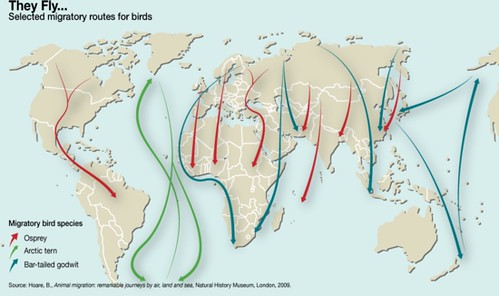
Birds migrate for hours or even days at extremely high metabolic rates. During long flights, they can increase up to 10 times the basal metabolic rate. The stick-tailed coyote (Limosa lapponica baueri) can fly 6,000–8,600 km non-stop from New Zealand to stopovers in Southeast Asia. Ducks generally travel shorter distances between stopovers. However, due to their heavier bodies and shorter wings, ducks are less dynamically efficient and likely experience physiological stress during their shorter migratory flights. Periods between flights can also be called resting phases. These are periods of frenzied energy recovery and physical recovery. During these pauses, birds increase their body weight by 30-50% of their lean mass to ensure the continuation of their journey. Birds have developed physiological and behavioral adaptations to cope with this demand for energy expenditure and gain. Migrants, especially those who migrate between widely separated stopovers, adapt to these demands by regularly and repeatedly rebuilding their bodies. During refueling periods, they increase the size of the digestive system and reduce flight muscle mass, and they undergo adverse adjustments before taking off.
Migration, an important biological event with epizootic effects, depends on factors such as bird susceptibility, presence of pathogens, vectors, and temperature and humidity (Keymer, 1958; Page, 1976). Migration-related stress can increase the bird's susceptibility to pathogens and the scattering rate of these pathogens. Migration is very laborious and if birds become sick, they can spread pathogens over shorter distances (Weber and Stilianakis, 2007; Feare, 2007).
What pathogens can migratory birds carry?
Migratory birds can disperse microorganisms across international borders. Numerous pathogens harmful to poultry or other vertebrates have been associated with such birds (Hubalek, 1994, 2004). Studies showing that migratory birds can spread the deadly H5N1 (bird flu) virus without being affected themselves have aroused great interest worldwide during bird flu epidemics. However, reported cases of death of migratory birds due to H5N1 from Asia have raised concern. Besides avian flu, migratory birds are thought to play a role in the transmission of avian viruses such as Newcastle disease virus, avian pneumovirus, and duck plague virus. Similarly, bacterial pathogens such as Chlamydophila psittaci and Pasteurella multocida can be transmitted to poultry through migratory birds. Migratory birds are also known to spread West Nile virus, equine encephalitis virus, Borrelia burgdorferi, and enteropathogens such as Campylobacter and Salmonella.
They circulate avian influenza virus (AIV), avian pneumovirus, Newcastle disease virus, duck plague virus, Chlamydophila psittaci, Campylobacter and Salmonella (Hubalek, 1994; Palmgren et al., 1997; Wobeser, 1997; Alexander, 2000; Hubalek, 2004) . The pathogen spread potential of migratory birds became a major concern during the spread of West Nile virus (WNV) in North America in the late 1990s (Rappole and Hubalek, 2000; Reed et al., 2003). Over the past few years, migratory birds have brought the H5N1 influenza virus to many countries by choosing specific flight paths across different continents (Brand, 1984; Rappole et al., 2000; Stroud et al., 2004).
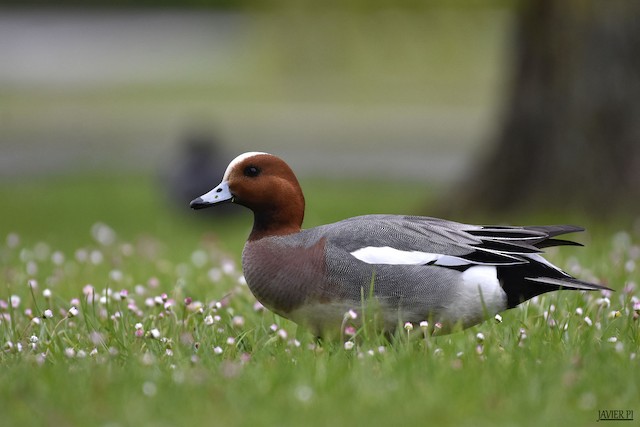
Mareca penelope (ebird.com)
Common habitats of migratory and native birds
An important point that increases the risk is that migratory birds and local birds use common areas (especially water sources). This can cause diseases to be transmitted directly to the birds of the region, making them more persistent and easily spread.
Protection from potential risks to poultry farming by migratory birds
The importance of the existence of these creatures in the natural balance and the fact that they are not our enemies should be accepted, but a series of precautions should be taken in farms by foreseeing the dangers they may create for production. To this end, strict biosecurity and continuous surveillance are of paramount importance.
Eliminate bait residues that may attract birds
Feed silos can sometimes leak or scatter when new loads are being made from the vehicle. Surrounding bait debris is attractive to rodents as well as birds.
Prevent puddles
Unevenness on the poultry house can cause rainwater to accumulate. Take care to improve land leveling and drainage to prevent debris that may attract birds.
Do not allow nest formation
Channels on roofs and tops of cooling pads can be ideal for nest formation and are more likely to be overlooked. Check these areas often.
Follow the clues
Watch for bird droppings. Areas of concentration may indicate the presence of an overlooked attractive element.
Add risky times to your calendar
Track migration start and end dates in your area. Intensify environmental disinfection at times of risk.
Protection in high risk areas
Coops may be located directly on migration routes, close to wetlands and/or resting areas. In this case, laser or sound repellents can be placed inside the facility.
The place of sanitation and disinfection in the fight
In addition to physical contact, birds may leave their droppings on the premises of the enterprise. In addition to being a reservoir for diseases, feces protect the pathogens they contain against the attacks of disinfectants with their rich organic matter content. For this reason, shoes and boots that can carry the risks inside the poultry house should be washed and cleaned frequently, and the disinfectant solution to be used in the foot pools should be prepared daily.
It will be useful to consider the environmental temperature and organic pollution while determining the product and dilution to be used in environmental disinfection.
Sources
Alexander, D.J., 2000. A review of avian influenza in different bird species. Vet. Microbiol., 74: 3-13.
Hubalek, Z. and J. Halouzka, 1999. West Nile fever- a reemerging mosquito-borne viral disease in
Europe. Emerg. Infect. Dis., 5: 643-650.
Hubalek, Z., 1994. Pathogenic microorganisms associated with free-living birds: A Rev. Acta Scient.
Natural. Brno, 28: 1-74.
Hubalek, Z., 2004. An annotated checklist of pathogenic micro-organisms associated with migratory birds.
Rappole, J.H. and Z. Hubalek, 2000. Migratory birds and West Nile virus. J. Appl. Microbiol., 94: 47-58.
Rappole, J.H., S.R. Derrickson and Z. Hubalek, 2000.
Migratory birds and spread of West Nile virus in the Western Hemisphere. Emerg. Infect Dis., 6: 319-
328
Palmgren, H., M. Sellin, S. Bergstrom and B. Olsen, 1997. Enteropathogenic bacteria in migrating birds arriving in Sweden. Scand. J. Infect. Dis., 29: 565- 568.
Stroud, D.A., N.C. Davidson, R. West, D.A. Scott, L. Hanstra, O. Thorup, B. Ganter and S. Delany, 2004.
Status of migratory wader populations in Africa and Western Eurasia in the 1990s. Int. Water Studies,
15: 1-259.
UNEP, 2005. Convention on migratory species, New Delhi, 10-13 June, 2005. Agenda Item 6.0.,
CMS/CAF/5, 17 March 2005.